
To many front-end developers, a carousel seems like a simple UI component—especially with AI coding tools making it trivial to whip up in a couple of minutes. However, as a front-end developer with a decade of experience, I must emphasize: choosing a carousel library is a critical technical architecture decision that directly impacts user experience, performance, and long-term maintenance costs.
A Carousel Is More Than Just Sliding Images
A carousel component needs to be evaluated across multiple dimensions, including interaction, performance, and accessibility. An excellent carousel library must seamlessly handle the following:
- Interaction: Touch gestures, dragging, momentum scrolling, edge bounce, and resistance simulation. These factors directly affect how "native" the app feels.
- Performance: Butter-smooth 60fps animations, virtual list support, and lazy loading for images. This is particularly crucial on low-end Android devices.
- Accessibility: Keyboard navigation, screen reader (ARIA) support, and focus management—essential requirements for inclusive design.
Key Evaluation Dimensions
For an objective comparison, I will analyze these libraries across five dimensions derived from real-world post-project retrospectives:
- Core Experience: Do touch and swipe gestures feel responsive, natural, and fluid without dropping frames?
- Feature Depth: Does it support common production needs like autoplay, infinite looping, thumbnails, pagination, vertical mode, and nested sliders?
- Extensibility & Customization: Is the API design intuitive? Can you easily add custom animations or behaviors? How robust is the plugin ecosystem?
- Developer Experience: Is the documentation clear? Is TypeScript support solid? Is it actively maintained with timely issue responses?
- Bundle Size & Performance: The footprint of imported JS/CSS and its impact on first-contentful-paint (FCP) time.
In-Depth Comparison of Popular React Carousel Libraries
Today, I'll compare several popular image carousel libraries on the market to help you choose the right fit for your project. The last one on the list is an absolute gem—once you see it, you'll know exactly which one to pick.
Keen Slider
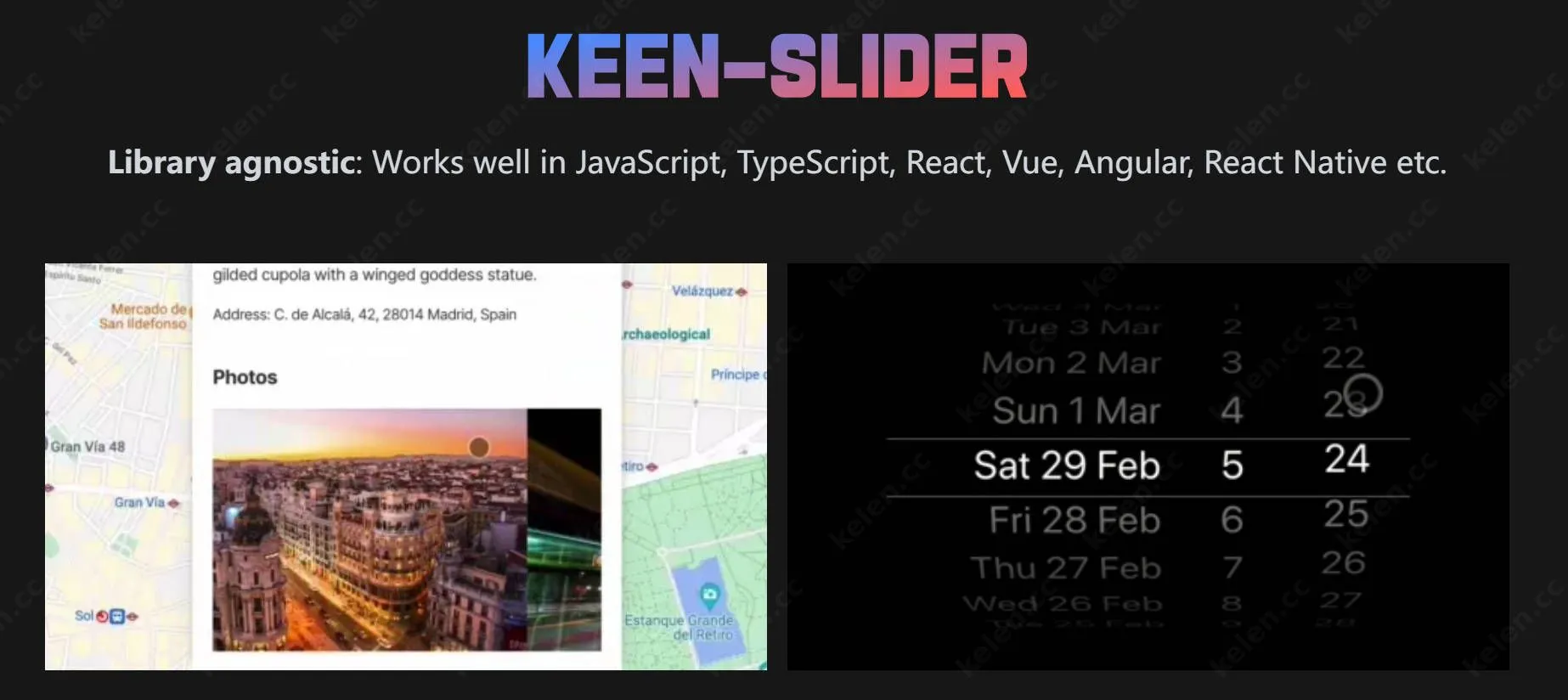
Keen Slider is a lightweight native JS slider library with a dedicated React Hook API. Zero-dependency and delivering a near-native swipe feel, it supports dragging, parallax effects, and virtual sliding. With an ultra-small footprint and stellar performance, it is ideal for projects with strict loading speed and custom styling requirements.
Nuka Carousel
Nuka Carousel is an open-source React carousel component library originally created by Formidable Labs (and now maintained by Nearform). Its defining features are being lightweight, responsive, and exceptionally accessibility-friendly out of the box.

React Multi Carousel
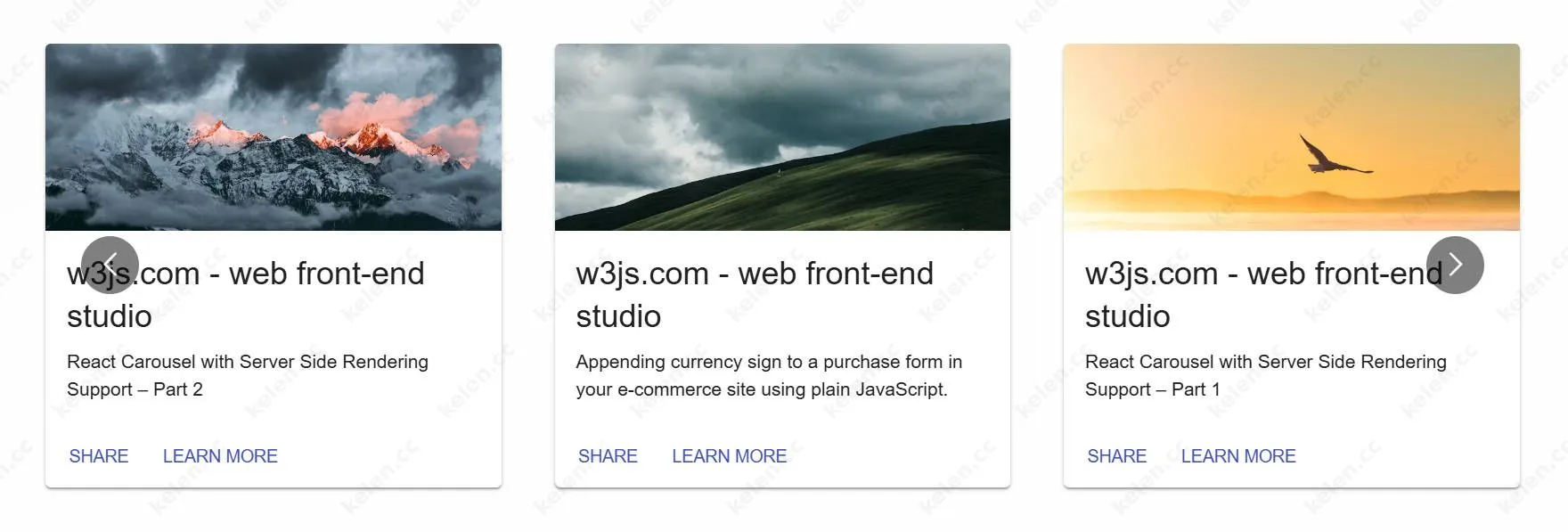
React Multi Carousel is a lightweight React component library designed specifically for multi-column layouts. Its primary advantage is the ability to arrange multiple items in a single view (such as e-commerce product cards or image galleries) with full Server-Side Rendering (SSR) support.
Pure React Carousel
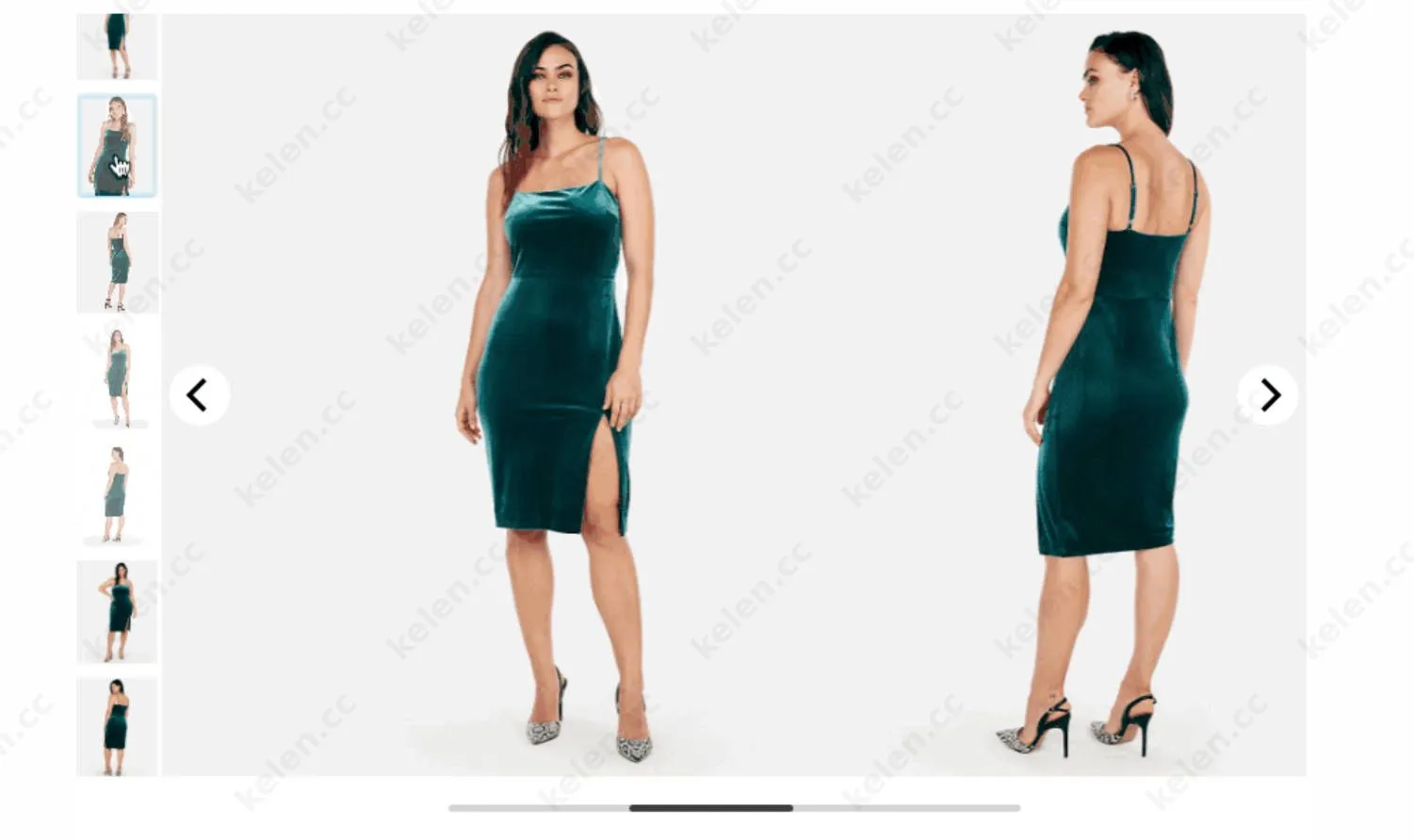
Pure React Carousel is a highly flexible, unopinionated React carousel library developed by Express Labs. Unlike most plug-and-play libraries that are notoriously difficult to restyle, it acts like a set of foundational building blocks (similar to table tags), allowing developers to freely compose the DOM structure and retain complete control over CSS styles.
React Slick
React Slick is one of the most widely used carousel/slider libraries in the React ecosystem. It is essentially a React port of the famous jQuery plugin Slick Carousel.

Embla Carousel
Embla Carousel is a lightweight, flexible, and headless carousel library. Weighing in at around 8KB gzipped, it is framework-agnostic while offering top-notch React support. Its core strengths lie in exceptional performance, high customizability, and a hands-off approach to CSS styling. With a powerful API and a rich plugin ecosystem (autoplay, pagination dots, etc.), it's perfect for developers who demand total layout freedom and extreme performance.

Swiper
Swiper is currently the premier mobile carousel library in the React ecosystem. Built with native JavaScript, it focuses heavily on hardware acceleration and touch interaction optimization. Featuring a modular architecture, it supports 3D transforms, parallax scrolling, virtual slides, and multi-framework integration (React, Vue, etc.). It serves as the industry standard for high-performance carousels, trusted by global brands including BYD, Nike, and Coca-Cola.

Conclusion
After this detailed breakdown, my final advice is to pick one or two libraries and test them directly in your project—the best choice is always the one that fits your specific business requirements. If you know of any other standout React carousel libraries, feel free to drop them in the comments, and I'll make sure to update the article!